
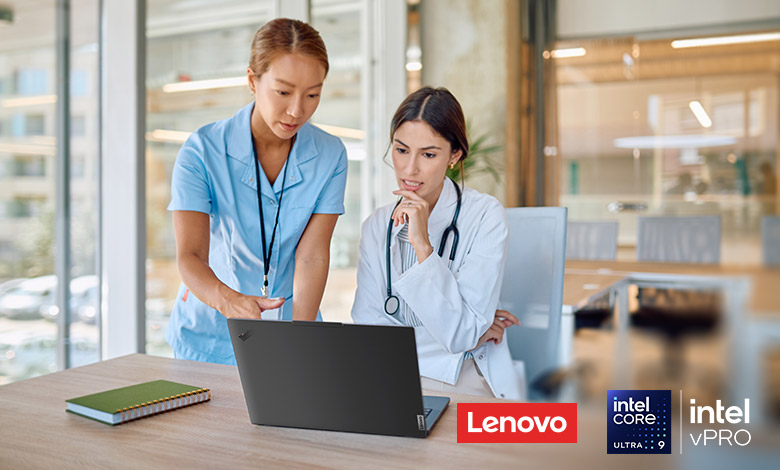
Healthcare organizations are under growing pressure to improve patient care, strengthen security, and operate more efficiently, all while managing increasingly complex technology environments. That is why endpoint strategy has become a much more important conversation. The devices clinicians rely on every day influence workflow speed, communication, security posture, and how prepared an organization is to adopt the next generation of AI-powered experiences.
Why Modern Endpoint Strategy Matters for Healthcare
One of the biggest challenges in healthcare today is the complexity of the endpoint environment itself. Many organizations are supporting a mix of aging PCs, shared clinical devices, carts, and specialty systems across hospitals, clinics, and remote settings. That makes it difficult to standardize experiences, maintain reliable performance, and secure devices at scale. At the same time, clinicians need reliable technology so they can focus on patient care instead of delays, downtime, or technical issues.
The cost of inaction is significant. When endpoints fail or underperform, the impact is immediate. Slow logins, unreliable performance, and device issues can frustrate clinicians and interrupt care delivery. Older devices also increase lifecycle costs by generating more support tickets, more hands-on IT work, and more unexpected replacements. On top of that, endpoints remain one of the most attacked surfaces in healthcare, which means outdated environments can increase exposure to security and compliance risks.
Improve Care Delivery, Reduce Complexity
Modern, AI-ready endpoints help healthcare organizations address these pressures in practical ways. Lenovo devices with Intel® Core™ Ultra 9 processors powering Intel vPro®, combined with Microsoft 365 capabilities, can support more reliable performance, streamline endpoint management, and improve collaboration across care teams. Built-in features such as background blur, automatic framing, voice clarity, and live captions enhance virtual care and remote collaboration, helping clinicians stay focused without added friction.
Beyond collaboration, the value centers on three critical areas: security, lifecycle efficiency, and AI readiness. Hardware-level protections and modern identity and operating system tools strengthen security without slowing clinicians down. Standardizing devices can reduce operational strain on lean IT teams by simplifying deployment, management, and refresh cycles. And as organizations begin thinking more seriously about AI, AI-capable PCs offer a way to support local workloads with stronger privacy, responsiveness, and reliability. Instead of treating AI as a distant concept, healthcare organizations can begin preparing now by building the right endpoint foundation.
Practical Guidance for Healthcare IT Leaders
There are practical steps healthcare IT leaders can take now. First, start endpoint refresh conversations with workflow impact, not technical specifications, and ask “where are our clinicians losing time right now?” Second, bring security, IT operations, and clinical stakeholders into the conversation early so decisions reflect both technical requirements and care delivery realities.
Healthcare leaders should also assess their endpoint inventory, identify the areas where bottlenecks are most severe, and pilot AI PC use cases with frontline teams first. This approach can help organizations assess value in real-world clinical settings before scaling more broadly. For those already using modern solutions, the opportunity here is to deepen the impact by integrating more AI-driven features while continuing to improve workflow efficiency.
Don’t Give Hackers an Inch
Security-driven modernization can also act as a powerful catalyst for change. As concerns over endpoint-based attacks continue to grow, upgrading to modern devices with stronger built-in protections and better manageability can reduce manual IT intervention while improving overall resilience.
Final Takeaway
Endpoint modernization should be viewed not only as a technology refresh, but as an investment in clinician experience, operational stability, defense, and long-term readiness for AI. The best endpoint strategy is one clinicians do not have to think about.
Modern, secure devices, AI-ready featuring Intel® Core™ Ultra 9 processors powering Intel vPro® help reduce friction, support better care experiences, and give IT teams a stronger foundation for whatever comes their way.
Ready to learn more? Check out this podcast episode of TechSperience for more insights into modernizing your endpoint strategy. You can also contact your Connection Account Team for help or visit our Lenovo and Intel showcase page.