Most plants can see more than they ever could. There are dashboards on the floor, dashboards in the office, and data streaming off every line. Ask the people running those plants whether decisions actually happen faster than they did five years ago, and the answer is usually no.
That gap is the problem worth solving. Manufacturing has spent two decades automating, and somewhere along the way we stopped asking whether any of it made the operation smarter.
The numbers say most companies are still early. McKinsey’s State of AI in 2025 found that 88 percent of companies use AI somewhere, but only about one in three has started to scale it. Deloitte found that 29 percent of manufacturers use AI or machine learning at the facility or network level. Trying AI is no longer the hard part. Making it part of how the plant runs is.
The Data Is Already There. The Decision Still Waits for a Meeting.
Almost no plant I visit has a data problem. The ERP, the MES, and the historian record nearly everything that happens. What is missing is what comes next. The answer lands on a dashboard, and then the decision waits for someone to notice it, raise it, and schedule a conversation about it.
At the same time, a large share of the real know-how still lives with a handful of experienced people, and some of them are getting ready to retire. So, the question is not whether you have data. It is whether the plant can turn that data into a decision before the expertise walks out the door.
Five Steps, and Nobody Skips to the End
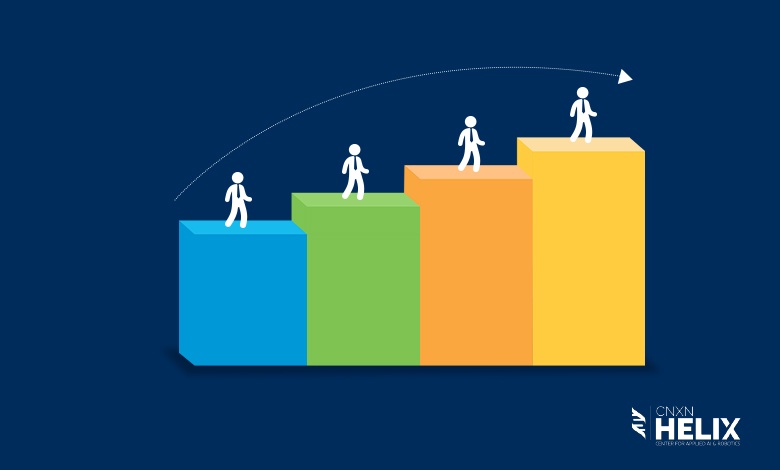
It helps to think about maturity in five steps rather than as a single leap into AI.
- Digitized. Can I see what is happening?
- Automated. Can the system run a repeatable process?
- AI-assisted. What should I do?
- Human plus agent. Help me decide.
- Autonomous. Act within guardrails.
[GRAPHIC: Slide 5, The Road to Autonomous Operations. The anchor visual for the piece. The staircase shows the five steps with the same labels and questions as the list above, so the graphic could replace the list rather than sit beside it.]
The first two are familiar territory. Step three is where AI starts helping. Step four is the shift that matters most right now, and step five is letting low-risk actions run inside limits you set.
Most plants I walk into sit somewhere between steps two and three. Different processes can sit at different steps, and that is normal. If you are early, aim for step three. If you are further along, pick a few processes and move them carefully into step four.
What nobody does is jump straight to autonomy. You get there one process at a time, and there is a simple test for whether you are actually moving: did your first use case make the second one faster and cheaper? If every project starts from zero, you are not scaling. You are collecting pilots, which is a different activity that happens to look similar on a status report. That is also why so many agent projects get canceled, because the value is unclear, the cost grows, or the controls arrive too late. All three are fixable.
What Step Four Looks Like on the Floor
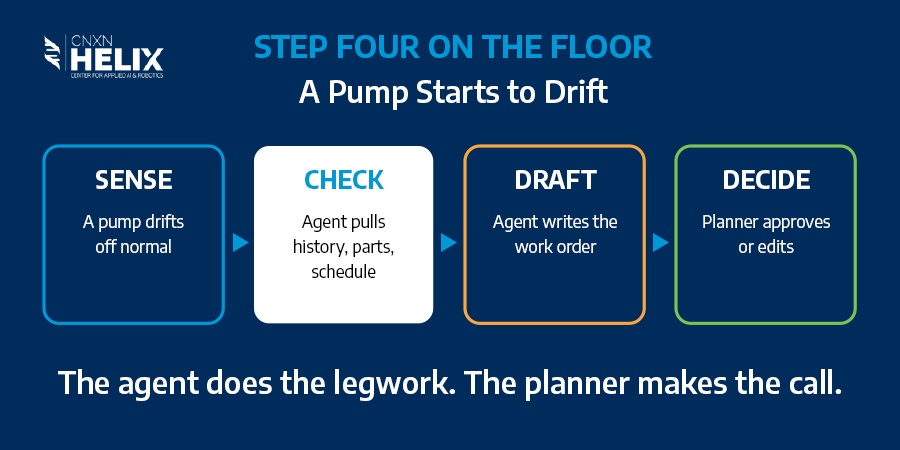
Picture a pump starting to drift outside its normal pattern.
At step three, a dashboard turns yellow and somebody has to notice it. At step four, the agent notices. It checks the maintenance history, the parts on hand, and the production schedule. It drafts the work order, the parts pick, and a maintenance window that will not hurt the line.
Then it stops. The planner reviews the work, changes whatever needs changing, and makes the call. The agent does the legwork. The person keeps the judgment. Once you trust that loop, the low-risk pieces can begin to run on their own.
Where to Start, in Four Sentences You Have Probably Already Said
Listen for the sentence you hear most often in your plant. Each one points to a different first move, and you do not need to tackle all four. Pick the one that hurts most today.
“Our experts are retiring.”
This is the knowledge problem. Copilot and agents can get one person’s know-how to everyone else: troubleshooting, standard operating procedures, shift handoffs, root-cause write-ups. What usually slows this down is not the model. It is the foundation underneath, meaning identity, security, licensing, and who is allowed to see what. Get that right first, then build agents around repeatable work people already do every week.
“We find out too late.”
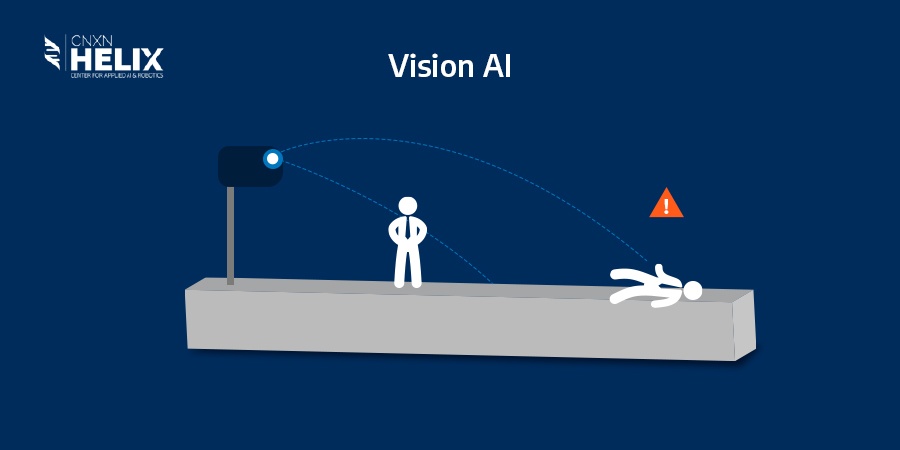
This is the visibility problem, and most plants are closer to solving it than they think. The cameras are already installed. Nobody can watch all of them, so the footage only becomes useful after something has gone wrong. The challenge was never collecting more information. It is doing something with what you already see.
Vision AI from CNXN Helix® adds AI to the cameras you already own and processes the video on site rather than shipping it somewhere. Start with one practical use case, whether that is a PPE check, a quality check, or a forklift near-miss. Prove it on one line, then reuse the platform for the next thing.
One piece of advice that matters more than the technology: involve HR, safety, and the people on the floor early. When the goal is clearly about removing hazards and coaching rather than policing, adoption gets much easier. When it is not clear, no amount of accuracy will save it.
“Our data cannot leave the building.”
Sometimes the constraint is that simple, and it is usually drawings, formulas, or maintenance history. AI Jumpstart is a way to test private AI on your own data without starting with a full data center project. What I like about it is that it answers the practical questions quickly: is a smaller model accurate enough, what does it cost, and does it actually improve the process? My rule is to start with the smallest model that can prove the outcome. You can always go bigger once the value is clear.
“Our security team is drowning.”
For security teams the issue is volume, and manufacturing gets more of it than anyone. IBM’s X-Force Threat Intelligence Index 2026 put manufacturing at 27.7 percent of incidents, more than any other industry, for the fifth year running. No team can manually investigate every alert. An AI SOC agent can gather the evidence, draft the incident summary, and recommend the next action, while your people still approve the response. And if IT and OT are managed separately today, build a path for the important OT alerts to reach the SOC. The handoff matters as much as the tool.
One Front Door Instead of Four Systems
A paper products manufacturer we worked with had long-tenured people and a strong culture. But when someone in sales needed an order status, a price, or a ship date, they had to know which of four systems held the answer. Most of the time the fastest path was to walk across the building and ask the one person who knew.
Most companies have a person like that. If a name just came to mind, that is the dependency I mean, and that person is probably tired.
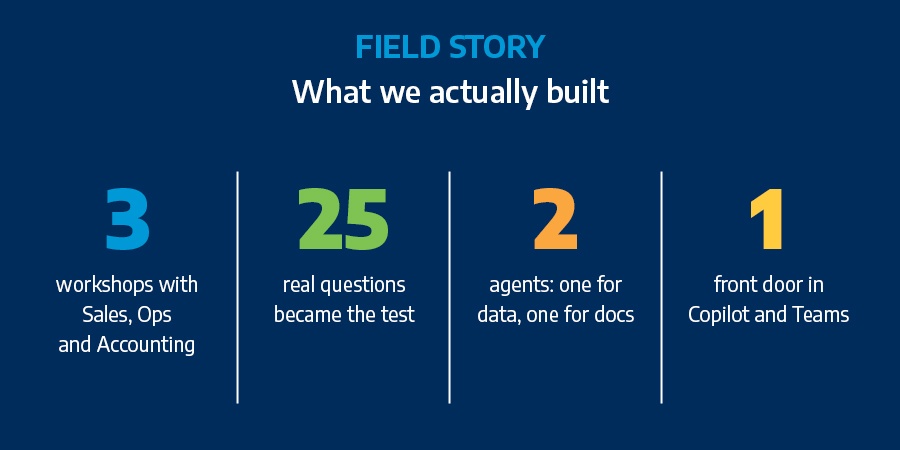
We started with the people rather than the technology. Three workshops with sales, operations, and accounting produced 25 real questions that came up every week and took too long to answer. Those 25 questions became the scope and the pass-or-fail test.
From there we built two agents, one for structured data and one for documents, both sitting behind a single front door. Someone asks a question in plain language, and the front door routes it to the right agent. The important part is permissioning: we did not invent a new access model, so people get an easier way to ask without gaining access to anything new.
What changed is that instead of searching four places, people had one place to ask, and every answer came with a source. We tested all 25 questions against the system of record. That last part matters more than it sounds. If someone is about to quote a customer a price, a confident answer is not enough. They need to know where it came from and be able to open the record.
What We Would Do Differently
The AI worked fine. The rollout was the slower part, and that was on us. We could see that people were searching less, but we had never timed the old process before we started. So, I cannot tell you how many hours we saved. That would have been our best number, and we did not capture it.
Now, in week one of every project, we time the real process before we change anything. We also learned to test in the place people actually work, because the answers were right, but one channel behaved differently from the others and we had to work through it. None of that was an AI problem. All of it was plannable.
Wherever It Runs, Govern It Once
These workloads will run wherever they make sense: cloud, private infrastructure, or the edge. The technology choice follows the environment you already have, not the other way around.
The principle that carries across every stack is governance. Treat every agent like a new hire. Give it an owner, an identity, and clear limits. Set that up once, and every use case after it gets safer and faster to launch.
Where This Leads
The World Economic Forum tracks 238 Lighthouse sites, the plants setting the pace globally. Those sites run more than 50 digital and AI use cases each, and they report 43 percent more output per person-hour and 35 percent fewer defects.

The number worth noticing is a different one: new hires get up to speed 67 percent faster. That is a direct answer to the retiring-expert problem. Capture what people know, make it available in the flow of work, and the next person becomes productive sooner. And those sites got there one use case at a time.
If You Do One Thing Next Week
If you are new to this, pick a single plant KPI, put one person’s name next to it, and time the process as it works today. Do that before you build anything.
If you are already scaling, make a list of every agent running in your company and name the owner of each one. Most organizations cannot finish that list on the first try, and that gap is the first thing to fix.
Then think again about the person everyone walks over to when they need an answer. Every plant has one. They are valuable, but they should not have to be the system. Capture what they know, put it where the work happens, and give them their day back.
That is how automation starts becoming a smarter operation.
Not sure which step your plant is on? Six questions, about two minutes, and your answers stay on your phone: Where Is Your Plant on the Road?
Footnotes
1McKinsey, 2025, The State of AI in 2025
2World Economic Forum, 2026, Global Lighthouse Network 2026
3IBM, 2026, IBM X-Force Threat Intelligence Index 2026
Rai Basharat

Rai Basharat is a seasoned Senior Director of Data Orchestration, responsible for advising and guiding businesses in transforming data strategies from concept to execution and delivery. He possesses extensive expertise in modern data stacks, ELT data pipelines, and leveraging data as features for predictive AI and various deep learning techniques, especially natural language processing (NLP). Rai has deep knowledge in the breadth and depth of generative AI and large language models (LLMs), introducing advanced techniques such as prompt engineering, retrieval-augmented generation (RAG), and fine-tuning. He is proficient in agentic workflows, tools, and extensions, enabling businesses to harness the full potential of AI technologies. Throughout his career, Rai has led significant eCommerce efforts and managed teams in app development, business intelligence, and machine learning for industry giants like Rocket Internet and Ali Baba. Rai's comprehensive understanding of data orchestration and AI, coupled with his strategic leadership, makes him an invaluable asset to any organization looking to navigate the complexities of the modern data landscape.